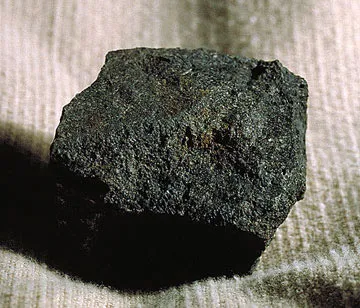
Bituminous coal is a high-energy, mid-rank fossil fuel (45%–86% carbon) formed over 100–300 million years. Known as “black coal,” it is a hard, dense sedimentary rock used primarily for electricity generation and steel production, with high carbon content and significant volatile matter.
The History of Carbon:
The word “Carbon” comes from the Latin word “carbo”, meaning coal. Carbon has been known since the prehistoric times in different forms including soot and charcoal. Lavoisier in 1772, demonstrated that diamond is a form of carbon, just like coal. The same was true for graphite, discovered in 1779 by Carl Wilhelm Scheele. Carbon is said to have several allotropic forms. It is also at the origin of inorganic compound elements such as carbon dioxide and methane, or even certain polymers.
| Atomic # | 6 |
| Atomic Mass | 12.011 |
| Melting Point | around 3550 °C (6420 °F) |
| Boiling Point | around 4827 °C (8721 °F) |
| Density | typically 1.8–2.1 g/cm³ |
How Carbon is Used
Carbon is the foundational element of life, usually used as a fuel source (coal, oil, natural gas), in structural materials (steel, graphite, carbon fiber), and in chemical compounds (plastics, polymers). It appears in pure forms like diamond (abrasives, jewelry) and graphite (pencils, lubricants, electrodes).
Leave a Reply