The World of Coffee
With roots in Ethiopia and Yemen over 500 years ago, Coffee did not grow in popularity until America made it the drink of choice> This is closely linked to the history of our country. After the tax from the Tea Act of 1773, America rejected tea sold by the British East India Trading Company, and went to the cheaper alternative of coffee. This brought it to the masses, and began its march towards global domination.
Types of Coffee
Pour Overs
The most popular form of coffee in the world is pour over. It is a process where you pour hot water over coffee in a paper filter. The process is the basis of the drip coffee machine.
A famous coffeemaker that created the drip market is the Mr. Coffee. Have a listen:
Percolated Coffee
The older brother to the modern day drip coffee machine is the percolator. It has one major downside, of it resteaps the coffee multiple times, causing it to become bitter, it was very uncommon to drink the coffee black. Most people who drank percolated coffee have very little issue drinking black drip coffee though as it is far less than bitter.
Espresso
Currently of the king of caffeine. Espresso uses pressurized water to put the coffee grinds under pressure. You also have to grind the coffee finer to allow for the extraction process to work faster This process requires some decently expensive equipment, and therefore is not a process normally done in homes, but budget espresso makers are becoming available. Starbucks made espresso widely available in the United States.
Moka Pot
Before the modern high pressure expresso machine, there wad still a way to make a higher pressure more caffeinated coffee than drip. It was called the Moka Pot. To use it, you would fill the bottom with water, a cup with coffee, and then screw it together. Placed upon a source of heat, it would force the water through the coffee under steam pressure. When finished, it would make a noise that sounds like them word Moka. This told you it was done.
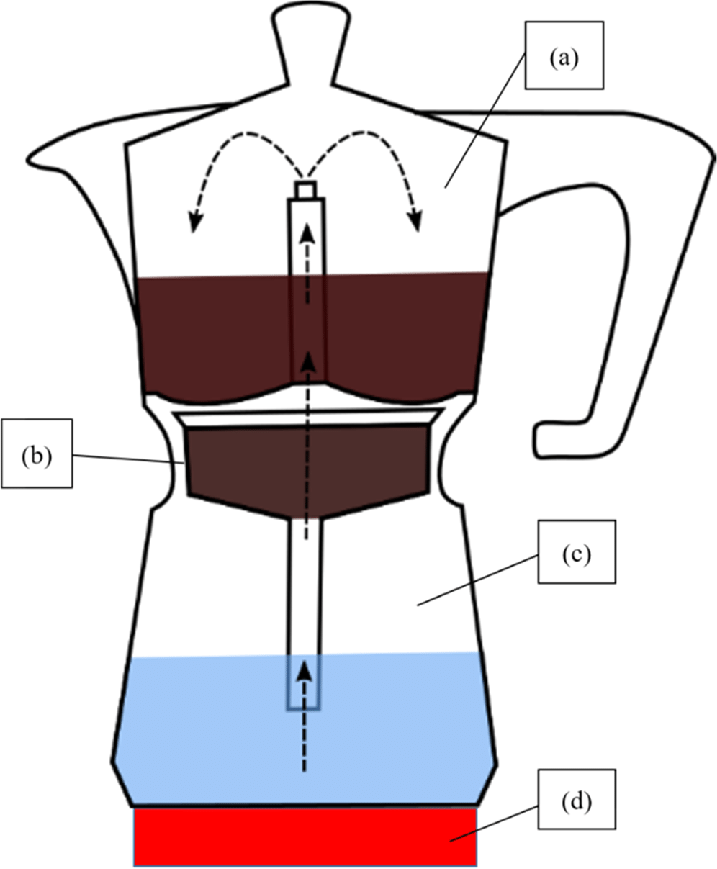
(a) Brewed Coffee
(b) Coffee Grinds
(c) Water
(d) Source of Heat
Leave a Reply